Fitz Roy: A Hiker's Guide

Julian
| 22-10-2026
 · Travel team
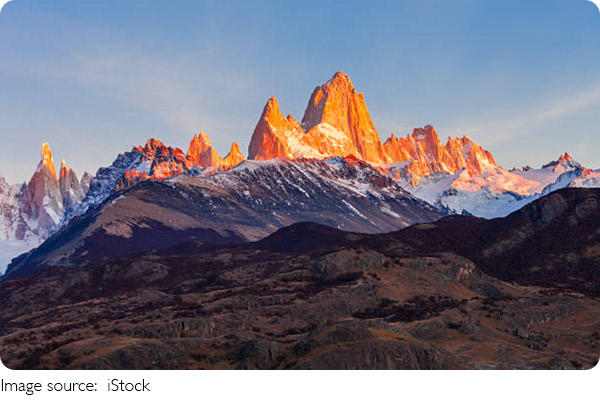
Hello, let's get started. You've probably seen the photo a hundred times: that granite spike shooting out of the ice, pink light hitting the face at dawn.
What the photo doesn't tell you is that Fitz Roy sits at the end of a long bus ride, a rough gravel road, and a hike that gains about 400 meters in the final hour alone. Worth it? Yes. But go in knowing what you're actually signing up for.
Getting to El Chaltén first
The mountain itself is in Los Glaciares National Park, and the gateway town is El Chaltén, a small settlement of a few thousand people at the foot of the range. Most travelers fly into El Calafate, then take a bus roughly three hours north along Ruta 40 and a stretch of gravel. Tickets run about $30 to $40 one way.
Buses leave a couple of times a day in high season, so book a seat a day ahead if you're on a tight schedule. Once you're in town, everything is walkable, and the trailheads start right at the edge of the streets.
The hike that earns the view
Laguna de los Tres is the classic route, and it's the one that puts you at the base of Fitz Roy itself. The full out-and-back is around 20 kilometers, and most people take eight to ten hours. The first 10 kilometers or so are gentle, rolling through lenga forest and past the campground at Poincenot. Then comes the last stretch: a steep, loose scramble up to the lagoon that gains about 400 meters in roughly one kilometer.
That part is not a stroll. Bring trekking poles if you have them, and start early, ideally before 7 a.m., so you're not descending in fading light.
Fitz Roy
What it costs to stay and eat
El Chaltén isn't cheap by South American standards, because everything gets trucked in. A basic hostel dorm bed runs around $25 to $40 a night, and a mid-range guesthouse room lands closer to $80 to $120. Camping at Poincenot is free, which is why so many hikers carry tents. Food in town is decent but pricey, so a lot of people stock up in El Calafate before the bus. Park entry itself costs nothing, which helps balance the rest.
Timing and weather you can't ignore
The window is roughly November through March, with December and January being the busiest. Patagonian weather changes fast. You can leave town in a T-shirt and hit sleet at the lagoon two hours later. Wind is the constant, often strong enough to make you lean into it on exposed sections. Pack a hard shell, a warm mid-layer, gloves, and a hat even if the morning looks clear. Locals will tell you the same thing: check the forecast, then expect it to be wrong.
Practical moves before you go
Carry more water than you think you need, since the streams are clean but the climb is dry and exposed. Cash matters, because some small places in town don't take cards reliably. Give yourself at least two full days in El Chaltén so you have a backup window if weather shuts down your summit day. And plan your arrival so you're not hiking the big route the morning after a long overnight bus. Sleep first, climb second.

Fitz Roy rewards patience more than fitness. The mountain hides behind clouds for days, then clears without warning. So build in a spare day, watch the sky, and don't treat the forecast as a promise. When the granite finally shows itself, you'll understand why people keep coming back.