Java Without the Rush

Hana
| 22-10-2026
 · Travel team
Welcome, everyone. Java gets sold as a checklist, Borobudur in the morning, Bromo at sunrise, and you can technically do both in three days.
But that pace leaves you exhausted and half-awake on the train. Plan it slower and the island opens up.
Start with the rail spine
Java has one huge advantage most Southeast Asian islands don't: a working long-distance train network running the length of the island. The Argo Bromo Anggrek covers Jakarta to Surabaya in roughly nine hours, and executive class seats typically run about $30 to $40.
You skip the highway traffic around Jakarta, you get legroom, and you watch rice fields and small towns slide past instead of staring at a truck's rear end. Book through the official rail app a few days ahead; weekend departures fill up.
Two temples, two moods
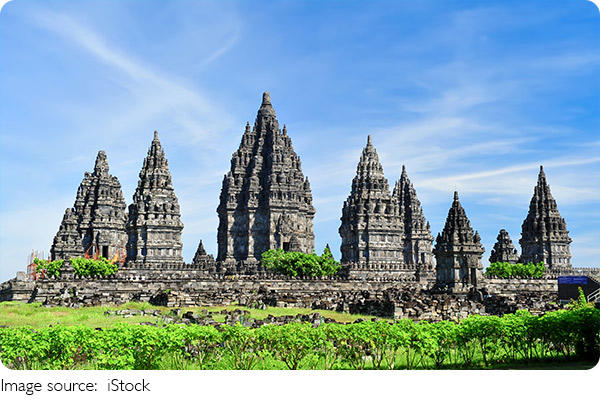
Borobudur and Prambanan sit about an hour apart near Yogyakarta, and people often lump them into one day. Don't. Borobudur rewards an early start, gates open around 6:30 a.m. and the stone terraces stay cool and quiet for the first hour. Entry runs about $25 for foreign visitors.
Prambanan works better in late afternoon light. Give each one its own half day and you'll actually look at the carvings instead of shuffling past them.
Java
Bromo needs a plan
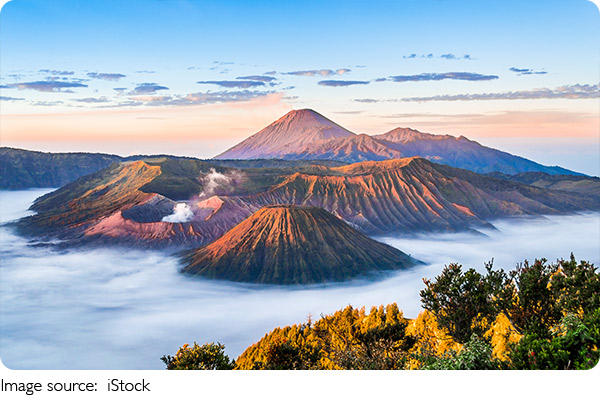
Mount Bromo is the postcard volcano, and the standard trip means a 3 a.m. departure from a nearby village in a jeep. The viewpoint at Penanjakan gets crowded, genuinely crowded, with dozens of vehicles lined up before dawn. A practical alternative: skip the famous viewpoint and walk the sand sea toward the crater rim instead, which most tour groups don't do. Bring a fleece. It's around 5°C at that hour, and people show up in shorts and regret it fast.
Yogyakarta as your base
Yogya is the easiest city to slow down in. Malioboro street runs late into the evening, the kraton palace district is walkable, and guesthouses near Prawirotaman start around $20 a night for a clean room with breakfast. From here you can reach both temples by car or local bus, and the airport connects to Jakarta and Bali in under two hours.
What to budget
A comfortable but not fancy two-week Java trip lands around $700 to $900 per person, covering trains, mid-range guesthouses, temple tickets, and a Bromo tour. Add $150 or so if you want private drivers between cities instead of public transport.
Mind the timing
April through October is the dry season, and that's when volcano views actually appear. During the wet months, Bromo's crater rim can be closed for safety, and Borobudur's terraces get slippery. Check the day before any volcano trip; conditions change fast.
Java rewards you for leaving gaps in the schedule. Take the train instead of the flight, give each temple its own morning, and let Yogyakarta be the place you come back to each evening. Next time you sketch a route through Indonesia, put fewer pins on the map and stay a little longer at each one.