Semeru: Java's Fuming Summit
Caleb Ryan
| 21-10-2026
 · Travel team
Welcome to today's article. You've probably seen Semeru on a postcard without knowing its name, that cone-shaped peak rising out of East Java's clouds at 3,676 meters.
It's the highest mountain on the island, and it's very much alive, puffing ash most days. Hiking it is not a casual stroll, but it's one of the most rewarding climbs in Indonesia if you plan it right.
Why this peak draws climbers
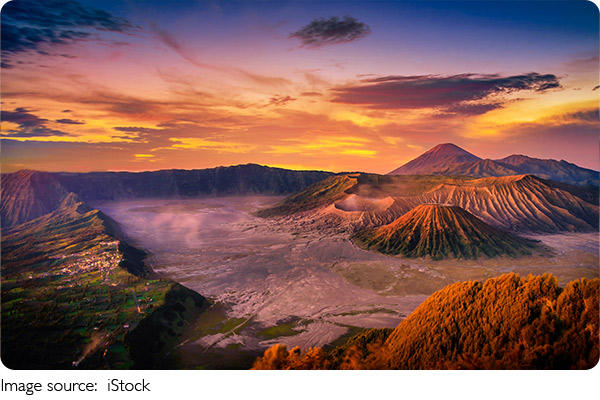
Semeru sits inside Bromo Tengger Semeru National Park, and most people pair it with the easier sunrise viewpoint at Mount Bromo nearby. The contrast is the point. Bromo gives you the wide crater photo in twenty minutes; Semeru asks for a real overnight trek.
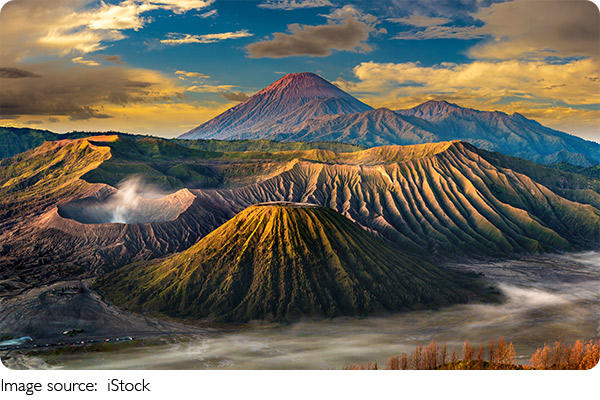
The reward is standing at the edge of a summit crater called Jonggring Saloko, watching the plume rise out of the earth a few hundred meters away. Climbers come from all over for that view, and for the bragging rights of Java's highest point.
The midnight start explained
Most guided climbs begin from Ranu Pani village, the last settlement before the trailhead. You'll usually leave around midnight, not because it's trendy, but because you need to reach the summit before the clouds build up by mid-morning. The route passes Kalimati, a camping plateau at roughly 2,700 meters, where many hikers stop to rest or sleep a few hours.
From Kalimati to the summit is the hard part, a steep stretch of loose volcanic sand and rock that takes about three to four hours at a steady pace. The sand is the real test, and you'll slide back a step for every two you take.
Semeru
What it costs and how to get there
From Surabaya or Malang, you can reach Ranu Pani by road in about three to four hours, and shared transport or a hired car is the usual way. Park entry and trekking permits typically run around 30 to 50 USD for foreign visitors depending on the season and what's included.
A guided package with a porter, meals, and camping gear usually lands between 150 and 300 USD per person for a two-day climb. Bring cash for the permit office, since card machines aren't reliable up there.
Plan around the mountain's mood
Semeru erupts regularly, and the park closes the summit route when activity spikes. Check conditions before you book anything, and build a spare day into your schedule in case the trail shuts. The dry season from April to October gives you the best odds of a clear summit.
Pack warm layers for the night, because temperatures at Kalimati drop close to freezing, and bring a headlamp with fresh batteries. A local guide is not optional here; the trail junctions are unmarked and the sand slopes are easy to lose in the dark.
Small details that save the trip
Wear gaiters or high boots to keep volcanic grit out, and carry more water than you think you need, at least three liters per person for the climb. Trekking poles help enormously on the descent, when the loose sand turns every step into a controlled slide. And listen to your guide if they call off the summit push. The crater rim is not a place to argue with a mountain that's actively venting.
Semeru rewards preparation more than enthusiasm. Get your permits sorted, pack for cold and grit, and give yourself a buffer day for the volcano's schedule. Do that, and you'll walk away with the view of a lifetime, plus a healthy respect for a peak that never really sleeps.