Beech Trees’ Hidden Defense

Antonio
| 21-10-2026
 · Plants team
Some trees growing side by side can respond very differently to the same disease. While one develops damaged leaves, another may remain comparatively healthy.
Scientists studying American beech trees have now found evidence that genetics helps explain this difference, raising the possibility that naturally resistant trees could support future efforts to protect forests from a serious plant disease.
A Disease Affecting Forest Health
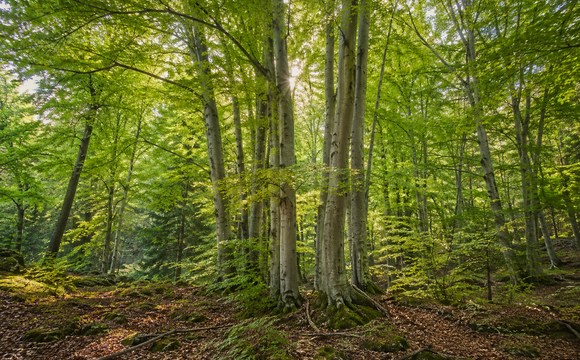
American beech (Fagus grandifolia) is an important tree species in eastern North America. Its presence helps shape forest ecosystems, including beech-maple woodlands, where its nuts provide food for wildlife. The species is now facing a significant challenge from beech leaf disease, a condition that can weaken trees and contribute to their decline.
The disease was first identified in Ohio in 2012. Since then, it has spread across affected areas, raising concerns about the long-term health of beech populations. Near the original outbreak area in northeastern Ohio, researchers have reported substantial tree losses, particularly among smaller trees.
One puzzling observation has offered a possible path forward: not every beech tree develops equally severe symptoms. Some remain relatively healthy even when neighboring trees show clear signs of disease. Researchers wanted to understand whether these differences reflected environmental conditions or something inherited through a tree’s genetic makeup.
Healthy Trees Offer an Important Clue
Scientists at Holden Arboretum in Ohio had an unusual opportunity to investigate this question. A research planting established in 2005 contained American beech trees selected for resistance to another disease. The planting existed before beech leaf disease arrived in the area.
After the new disease appeared, researchers noticed that certain trees continued to look healthier than others growing nearby. Because the trees shared broadly similar growing conditions, differences in their responses suggested that genetics might influence how strongly symptoms developed.
The team, led by David Burke of Holden Forests & Gardens, worked with researchers Mary Mason and Jennifer Koch from the USDA Forest Service. Their findings were published in the journal Forest Pathology in 2026. The research provides evidence that individual American beech trees can differ genetically in their response to beech leaf disease. This does not mean every healthy-looking tree is fully resistant, but it identifies a promising direction for further investigation.
Testing the Genetic Connection
To examine the possibility of inherited resistance, the researchers created new plants from branch material taken from trees that had shown either relatively mild or more severe symptoms. The material was grafted onto other seedlings and grown in a greenhouse, allowing the team to compare trees under more controlled conditions.
Researchers then exposed the trees to the microscopic nematode associated with beech leaf disease. Nematodes are small, wormlike organisms, and the species involved in this disease can enter developing leaf buds.
The team applied a consistent exposure to the buds and assessed the resulting symptoms when the trees produced leaves in spring. They measured the characteristic dark bands of damaged tissue that appear between the leaf veins. The results showed meaningful differences among American beech genetic types.
Some developed less affected leaf tissue than others under the same experimental conditions. Because the trees were exposed in a controlled setting, the findings strengthened the case that inherited characteristics contribute to disease response.
Lessons From Other Beech Species
The researchers also compared American beech with European and Japanese beech. Under the experimental conditions, European beech developed symptoms at levels broadly similar to American beech. Japanese beech showed much less affected leaf tissue, suggesting a stronger ability to resist or tolerate the nematode.
This difference is particularly interesting because the disease-associated nematode is native to Japan. Long-term coexistence between a plant species and an organism may be associated with different responses, although the experiment alone cannot explain every factor behind the result.
From Research to Forest Recovery
The next challenge is determining whether the promising traits can be passed from parent trees to their offspring. Researchers plan to locate and test more American beech trees that show few or no symptoms in areas where the disease has been established for years.
Additional experiments involving more trees and repeated testing will help establish how consistent the apparent resistance is. Controlled breeding could eventually help researchers develop trees with stronger resistance, potentially including individuals that also retain resistance to other beech diseases.
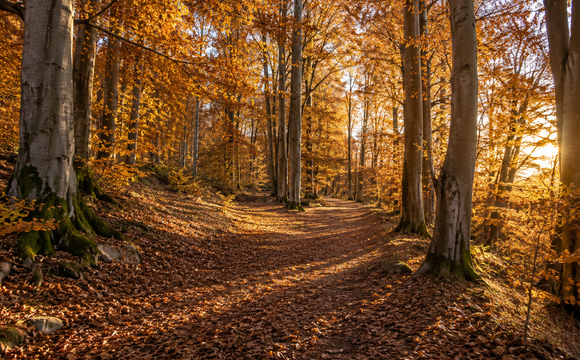
The discovery of genetic variation in American beech responses offers a hopeful direction for forest conservation. A successful breeding effort is not guaranteed, but identifying potential resistance is an essential first step. Continued research could help protect an important forest species while improving understanding of how genetic diversity supports the health and resilience of woodland ecosystems.