Salt and Stone in Chile

Julian
| 22-10-2026
 · Travel team
Hi there, readers. You probably know the Atacama Desert as the driest place on the planet, a flat brown map of nothing.
Then you drive west out of San Pedro de Atacama and the ground folds up into the Cordillera de la Sal, a ridge of salt and clay that looks carved and then abandoned. It's not a park with a gate and a ticket booth. It's a working landscape you drive through, walk on, and photograph until your phone battery gives out.
Cordillera de la Sal
Why the salt range stands out
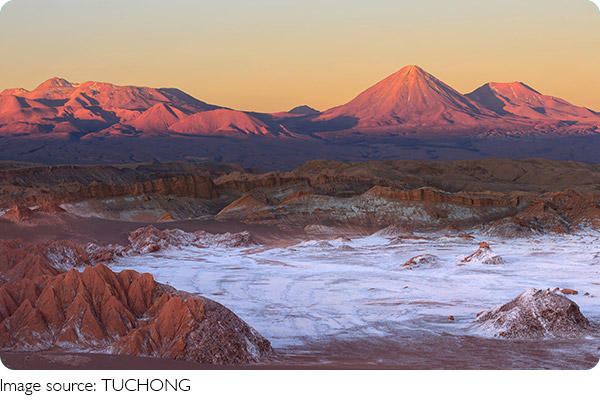
The Cordillera de la Sal is a small mountain range built mostly of halite and clay, pushed up over millions of years as the basin floor buckled. That geology gives you something you won't see on a normal hike: ridgelines that crunch underfoot, walls that look melted, and gullies where water carved channels and then vanished. The range sits just west of San Pedro and runs roughly north to south, so you can enter it from several points without crossing the whole thing. It's the kind of place where a twenty minute detour off the main road gives you an empty canyon and no one else in it.
What to see on the way through
Start with Valle de la Luna, the section most visitors hit first, where the salt crust forms sharp ridges and the distant volcanoes line the horizon. A short drive north brings you to Valle de Marte, a wide dune field that's easier to walk and far less crowded in the morning. Farther along the same road you'll find the Tres Marías formations, three eroded pillars of salt and clay that stand alone on the flat, and the Mina de Sal, an old salt mine where you can still see the cut blocks. If you want the classic view, climb the big dune at Valle de la Luna for sunset; the light turns the whole range pink and gold for about twenty minutes. Bring water, because there's none out there.
Getting there and getting around
San Pedro de Atacama is the base for everything. The nearest airport is El Loa in Calama, about 100 km south, and shared shuttles from Calama to San Pedro run regularly for around 15 to 20 USD per person each way. Once you're in town, you have two options: join a guided tour (roughly 30 to 50 USD per person for a half day) or rent a car. Renting gives you freedom, but the roads inside the range are unpaved and sandy, so a high clearance vehicle helps. Most rental agencies in San Pedro charge around 60 to 90 USD per day for a small SUV. If you drive yourself, fill up in town before you go, because there's no fuel station anywhere near the range.
Timing your visit
Go early or go late. Midday heat in the Atacama is brutal, and the salt reflects it straight back at you. Most tours leave around 4 pm for the sunset run, which puts you on the ridges when the temperature drops and the light softens. If you're driving, aim to be at Valle de la Luna by 8 am, when the gates open and the crowds haven't arrived. Allow at least half a day for the main sites, and a full day if you want to walk the ridgelines properly. Check the park entrance fee, which is small, around 5 to 10 USD, and bring cash because card machines are unreliable out there.
Practical tips before you go
The altitude sits around 2,400 meters, so take it easy on your first day and drink more water than you think you need. The sun is fierce even in winter, so pack a wide brim hat, sunglasses, and high SPF sunscreen. Wear closed shoes with grip, because the salt crust is sharp and loose in places. And don't wander off marked trails; the terrain looks uniform but the edges of the gullies drop away fast. A local guide will point out the safe routes and the formations worth the walk.
Food and dining prices
Dining options are concentrated in San Pedro de Atacama. A casual lunch or café snack typically costs around US$10–$20 per person. For a sit-down dinner, expect to pay roughly US$20–$35 for a main course. If you prefer to self-cater, local markets and small shops offer basic supplies (bread, cheese, fruit, nuts, and snacks) for around US$10–$20 per person per day. Carry plenty of water, as the dry desert air increases dehydration.
Where to stay
San Pedro de Atacama offers accommodation for different budgets. Budget hostels and guesthouses generally cost around US$20–$50 per night, while mid-range hotels range from US$80–$150. Boutique and upscale desert lodges typically cost US$200–$400 or more per night. Booking well ahead is recommended during peak season (December–February).
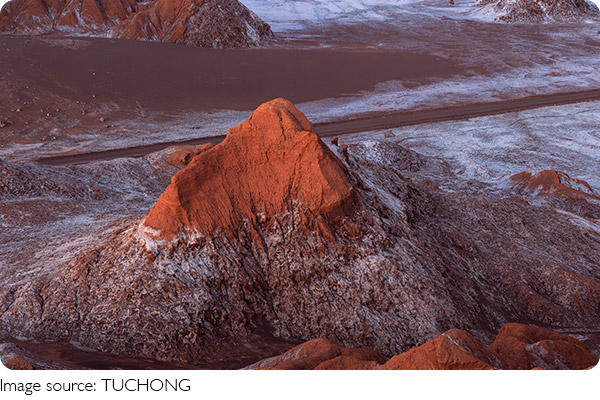
The Cordillera de la Sal rewards you for showing up early, driving slow, and leaving the itinerary a little loose. Pick one ridge, walk it fully, and let the rest of the range wait. You'll come back with better photos and fewer crowds than the sunset convoy ever gets.