Salt Flats of Atacama

Anika
| 22-10-2026
 · Travel team
Hello there, readers. You might expect a salt flat to be a flat white nothing you drive across in twenty minutes and forget.
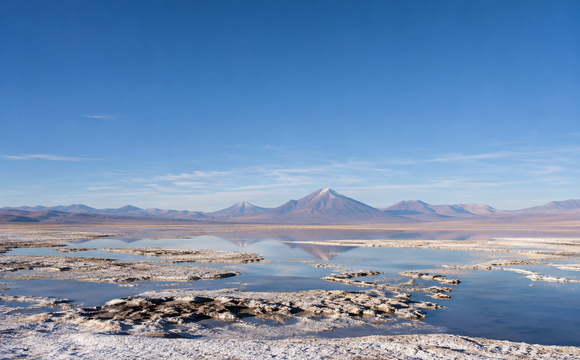
Salar de Atacama is not that. It's the third-largest salt flat on earth, sitting at roughly 2,300 meters in northern Chile, and the ground under your feet is a crust of salt and clay that shifts and cracks into polygon shapes you can walk across.
Salar de Atacama
Why the altitude sets the rules
The flat sits high enough that the thinner air changes how you plan the day. You'll feel it on stairs at your hotel in San Pedro de Atacama, the town most people use as a base. Keep the first day slow, drink more water than you think you need, and save the long walks for day two. The reward is a landscape that looks unlike anywhere else: white crust stretching to the Andes, with the Licancabur volcano standing over the whole basin.
The lagoons and their flamingos
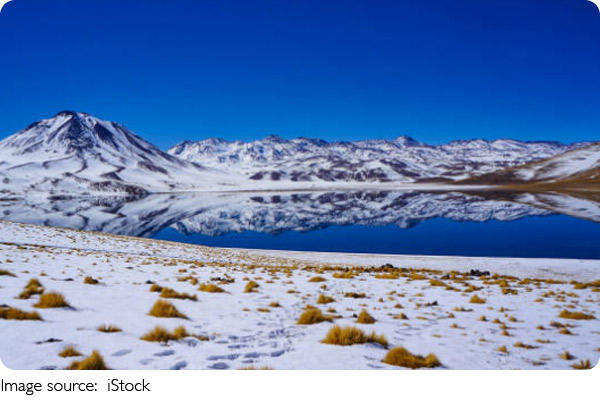
Two stops matter most for wildlife. Laguna Chaxa sits inside the salt flat itself and holds a breeding colony of Andean and James's flamingos that feed on brine shrimp in the shallow water. Go early, before the wind picks up and the birds move off. Then there's the Miscanti and Miñiques lagoons, a pair of deep blue lakes at around 4,100 meters with volcanic peaks behind them. The color contrast against the altiplano grass is the reason so many people rate it the highlight of the trip.
Getting there and around
Fly into Calama, about an hour and a half by road from San Pedro de Atacama. From town, most visitors join guided tours because the salt flat and lagoons sit inside reserves with entry fees and access rules. A half-day tour to Laguna Chaxa typically runs around $40 to $60 per person, and a full-day Miscanti and Miñiques trip sits closer to $70 to $90. Renting a car is possible, but the roads to the high lagoons are rough and the altitude can catch you out, so many people let a driver handle it.
Timing your visit
Mornings are calmer and clearer. Winds build through the afternoon, and on the salt flat that means salt dust in your eyes and camera. Book tours a day or two ahead in peak season, which runs roughly from December through February. If you want the night sky, San Pedro is one of the best stargazing spots in the southern hemisphere, and a guided astronomy tour costs about $30 to $50.
What to pack and watch for
Layer up. It can be warm at midday and near freezing before sunrise at the high lagoons. Bring sunglasses, a wide-brim hat, and lip balm, because the dry air and reflected light are relentless. Don't rush the altitude: give yourself a full day in San Pedro before heading to anything above 4,000 meters, and skip the heavy hiking if you feel a headache coming on.
Food and dining prices
Dining options are concentrated in San Pedro de Atacama. A casual lunch or café snack typically costs around US$10–$20 per person. For a sit-down dinner, expect to pay roughly US$20–$35 for a main course. If you prefer to self-cater, local markets and small shops offer basic supplies (bread, cheese, fruit, nuts, and snacks) for around US$10–$20 per person per day. Carry plenty of water, as the dry altitude increases dehydration.
Where to stay
San Pedro de Atacama offers accommodation for different budgets. Budget hostels and guesthouses generally cost around US$20–$50 per night, while mid-range hotels range from US$80–$150. Boutique and upscale desert lodges typically cost US$200–$400 or more per night. Booking well ahead is recommended during peak season (December–February).
Save the salt flat for a clear morning, keep your first day gentle, and let the altitude set your pace rather than your itinerary. Do that, and the flamingos, the blue lagoons, and the night sky will do the rest.