Torres del Paine Made Simple

Samir
| 21-10-2026
 · Travel team
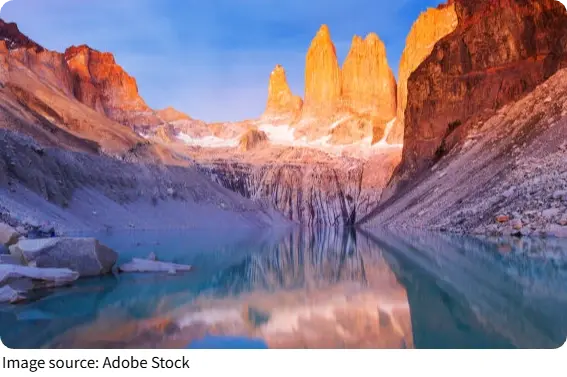
Hi, and welcome. You probably know Torres del Paine from one photo: three granite towers lit orange at sunrise.
That image is real, but the park is much bigger than that single viewpoint, and the trip works best when you plan around the whole place instead of chasing one shot.
Torres del Paine National Park
Why the location earns the trip
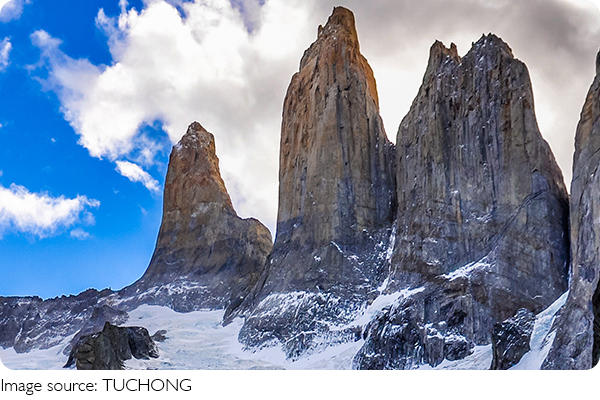
Torres del Paine sits in Chilean Patagonia, roughly a two-hour drive north of Puerto Natales. The park covers about 181,000 hectares and holds glaciers, turquoise lakes, and the Paine massif all in one boundary. You do not just get mountains here, you get the Grey Glacier calving into a lake and the Cuernos del Paine horns rising straight out of the grassland. Most visitors come for the W Trek, a four to five day route that links the base of the towers, the French Valley, and Grey Glacier. If you have less time, the day hike to Mirador Las Torres still delivers the headline view, though it's a steep final hour over loose rock.
Getting there and around
Puerto Natales is your base. Buses leave daily for the park entrance at Laguna Amarga, and the ride takes about two hours. From the entrance you'll catch a park shuttle to the trailheads, since private cars can't drive the internal roads. Inside the park, catamarans cross Lake Pehoé between Pudeto and Paine Grande, and that boat ride is how most W Trek hikers connect the two halves of the route. Book the catamaran in advance during peak season, because the afternoon sailing fills up.
What it costs and when to go
Park entry runs about 32 USD for foreign adults for a multi-day stay, and the catamaran crossing is around 40 USD each way. Camping at managed sites like Paine Grande or Los Cuernos typically costs 15 to 25 USD per person per night. Peak season is November through March, when daylight stretches past 9 pm and the weather is at its most stable. December and January bring the crowds and the highest prices. If you want fewer people on the trail and don't mind cold mornings, aim for late October or early April.
Food and dining prices
Food options inside the park are limited, so planning meals is part of the trip. At the managed campsites and refugios (like Paine Grande or Los Cuernos), a simple hot meal typically costs around US$15–$25, while a packed lunch or snack ranges from US$8–$15. If you prefer to self-cater, buying groceries in Puerto Natales before you head into the park is much cheaper: basic supplies for a day of hiking (bread, cheese, fruit, nuts, and snacks) generally cost around US$10–$20 per person. In Puerto Natales itself, a casual restaurant meal ranges from US$12–$20, and a hearty dinner after the trek usually costs US$20–$35. Carry cash, as card readers can be unreliable even at some food counters inside the park.
Planning tips that save trouble
Patagonian weather changes fast, so pack layers and a real rain shell even in summer. Wind gusts of 80 km/h are normal on exposed sections, and the French Valley is where most people get caught out. Reserve campsites and refugios months ahead, since the W Trek has fixed nightly capacities and rangers check bookings at each site. Carry enough cash for the entrance fee, because card readers at the gate are unreliable. And give yourself a buffer day in Puerto Natales on either end, since flights into Punta Arenas can be delayed by weather.
The park rewards people who build slack into the plan rather than racing the clock. Pick your route, lock in your campsites and boat crossing early, and leave room for the wind to do what it wants. Do that, and the towers at sunrise feel like a bonus instead of the whole point.