Tiny Dose, Big Effect!

Amara
| 26-10-2026
 · Plants team
A small amount of a chemical designed to control unwanted vegetation may sometimes produce an unexpected result. Researchers studying wood sorrel found that exposure to a low dose of the herbicide dicamba led the plants to produce more flowers.
The result highlights a surprising response to environmental stress and raises questions about how unintended chemical exposure can affect plants growing near treated areas.
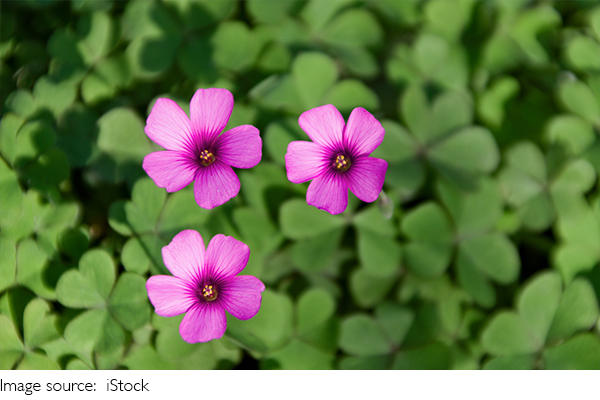
When Chemical Exposure Has an Unexpected Effect
Herbicides are designed to control plants that compete with crops or grow where they are not wanted. However, their effects can extend beyond the intended treatment area. During application, tiny amounts may drift through the air and settle on nearby vegetation.
Plants receiving this indirect exposure may encounter a much smaller dose than plants directly targeted by the treatment. Although the amount may be insufficient to cause the expected level of damage, it can still influence how a plant grows or develops. Researchers at the University of Michigan became interested in this possibility after observing that wood sorrel growing in areas affected by dicamba drift appeared to produce more flowers.
Understanding the Stimulation Effect
The phenomenon belongs to a biological response known as hormesis. It describes situations in which a low level of a substance or stress produces a stimulating effect, even though a higher level may be harmful. Scientists have documented similar responses in various organisms. However, the outcome depends on the substance, the amount involved, and the organism being studied. A response observed in one plant species cannot automatically be expected in another.
For the wood sorrel study, researchers wanted to determine whether low-dose exposure affected flowering and seed production. They also examined whether the response might be inherited by later generations. This distinction matters because a temporary reaction within an individual plant is different from a genetic trait that becomes more common across a population over time.
How the Field Study Was Conducted
The research team established a field experiment using Oxalis stricta, the scientific name for common wood sorrel. Part of the study area received low levels of dicamba, while another section remained untreated for comparison. Led by researcher Anah Soble Botran, the team measured plant growth, flower production, seed output, and other indicators of plant performance. They repeated the experiment across two growing seasons to see whether the results remained consistent.
During the first year, plants exposed to low doses of dicamba produced more flowers than those in the untreated section. Researchers also observed indications of increased seed production that year. The second year brought a different result. Although the exposed plants again produced additional flowers, the increase did not lead to the same improvement in seed production.
This difference demonstrates why flower numbers alone cannot provide a complete picture of a plant's reproductive success. Producing more flowers does not necessarily mean producing more seeds or leaving more descendants.
More Flowers Do Not Guarantee an Advantage
The researchers also investigated how the additional flowers affected visits from pollinators. They observed that plants exposed to dicamba received fewer visits relative to their flowering display. Their flowers were also smaller than those of untreated plants. One possible explanation is that pollinators had more individual flowers to visit, reducing the number of visits recorded for each flower. However, the study also raised questions about whether smaller flowers provide the same resources to visiting pollinators.
The researchers did not establish that the increased flowering consistently improved the plants' overall reproductive success. Instead, the findings revealed a more complicated response involving flower production, seed output, and interactions with other organisms. This is important because plant performance depends on several connected factors. A visible increase in one feature may not translate into a lasting advantage in the surrounding environment.
Did the Response Lead to Evolution?
Another central question was whether the increased flowering could become a lasting characteristic within the plant population. The researchers found no evidence that genetic differences explained the response among the plants they studied. Their results suggest that the increase in flower production was a temporary reaction to chemical exposure rather than a confirmed evolutionary shift.
The wood sorrel research reveals that unintended exposure to small amounts of herbicide can affect plant development in unexpected ways. Although dicamba exposure increased flowering, the benefits were not consistent across growing seasons, and the response did not provide evidence of an inherited change.

The findings underline the complexity of plant responses to environmental stress. Understanding those responses requires looking beyond visible growth to consider reproduction, genetic variation, and interactions with pollinators. Further research across different plant species will help clarify how widespread these effects may be and what they mean for vegetation growing near treated areas.