The Future of Racing on TV

Marcus
| 29-10-2026
 · Sport team
Watching a Formula One race is no longer simply about following cars around a circuit. Modern broadcasts combine live footage, detailed statistics, onboard cameras and expert commentary to give viewers a deeper understanding of what happens during a Grand Prix.
Throughout the 2026 season, Formula One and its broadcasting partners have continued developing new ways to present racing. Their efforts reflect an important change in sports television: audiences increasingly expect control over what they watch and how they experience it.
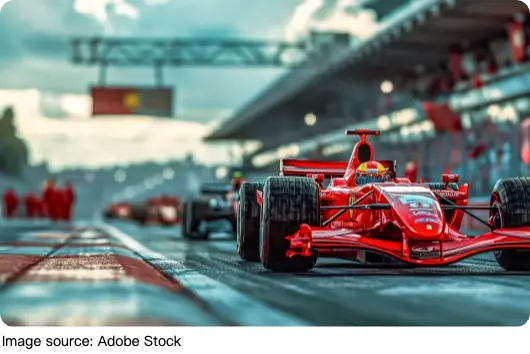
Bringing Fans Closer To The Action
Formula One presents an unusual challenge for television producers. More than 20 drivers can be competing simultaneously, often separated by several kilometres of racetrack.
A conventional broadcast cannot show every important moment. To address this, production teams combine trackside cameras with onboard footage, team radio communications and real-time timing information.
Viewers can follow overtaking attempts, compare lap times and understand why a particular strategy succeeds or fails. These additional perspectives are especially valuable during races when the most exciting battles take place away from the leading cars.
More Control Over Race Coverage
Personalisation is becoming an increasingly important part of the viewing experience. Through F1 TV, subscribers in supported territories can access alternative camera feeds, driver trackers and detailed timing information.
This allows dedicated fans to follow individual competitors while keeping track of the wider race. Sky Sports has also developed features that make it easier to revisit important incidents without abandoning live coverage.
Its Recap service, introduced in 2021, allows eligible viewers to watch selected highlights during race weekends. Such technology gives audiences more flexibility than traditional television broadcasting, where producers determine every camera angle and replay.
How Broadcasting Technology Is Changing
Behind the scenes, producing a Formula One broadcast requires extensive coordination. Camera operators, directors, engineers and graphics specialists work together to deliver clear coverage of extremely fast-moving events. The challenge involves more than capturing dramatic pictures.
Production teams must also explain complicated information, including tyre performance, pit-stop timing and gaps between competitors. Digital graphics help translate this information into accessible visual explanations. As broadcasting technology improves, producers can combine more information with live footage without overwhelming viewers.
A New Approach To American Audiences
The 2026 season also introduced an important change for Formula One viewers in the United States. TV became the championship's principal American broadcasting partner, replacing ESPN. The arrangement brought live racing into a streaming environment where audiences could access different race feeds and additional information.
American viewers can also select Sky Sports commentary through supported F1 TV viewing options.
The partnership demonstrates how Formula One is adapting its distribution strategy to audiences increasingly accustomed to streaming services.
Why Traditional Commentary Still Matters
Despite technological improvements, human storytelling remains essential. Experienced commentators help viewers understand the significance of a driver's decision, a sudden weather change or an unexpected mechanical problem. Expert analysis provides context that statistics alone cannot deliver.
The most effective coverage therefore combines reliable technology with informed explanations. Interactive options can enhance the experience, but they do not replace the excitement created by skilled live presentation.

What Comes Next For Viewers?
The evolution of Formula One broadcasting reflects wider changes throughout professional sport. Fans increasingly want immediate access to highlights, alternative perspectives and information tailored to their interests. However, advanced features must remain intuitive, particularly for newcomers unfamiliar with racing terminology.
Broadcasters also face challenges involving streaming reliability, subscription costs and accessibility.
The future of race coverage is therefore likely to involve greater choice rather than a single viewing format.
For Formula One enthusiasts, the ultimate attraction remains unchanged: the excitement of unpredictable competition. New technology simply offers more ways to experience every decisive moment.