Bryce Canyon: Hoodoo Heaven

Mei
| 05-11-2026
 · Travel team
Hello there, readers. Bryce Canyon looks small on a map, and plenty of people treat it as a two-hour photo stop on the way to Zion.
That's the expected version. The reality is a 56.2-square-mile park stacked with the densest collection of hoodoos on the planet, and if you give it a full day, it'll outshine stops twice its size.
Why the hoodoos win
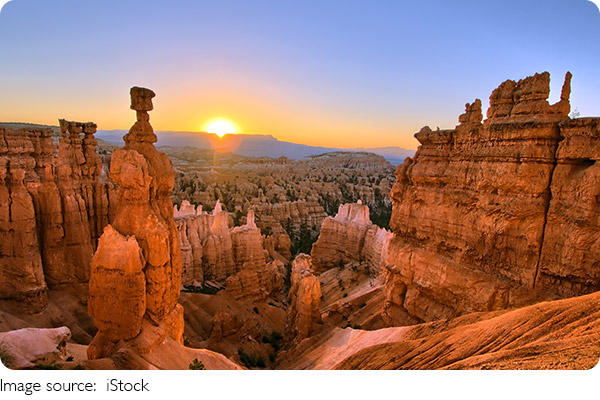
Hoodoos are thin rock spires carved by frost wedging, and Bryce has more of them than anywhere else on Earth. The numbers help: the park sits between 8,000 and 9,100 feet in elevation, and it logs around 200 nights a year below freezing. That freeze-thaw cycle cracks the limestone into the fins and pillars you see from the rim. Sunrise Point and Sunset Point both look straight into the main amphitheater, and the walk between them is under a mile on a paved path. Go at first light and the hoodoos at Wall Street glow orange before the sun clears the rim. It's the single best free show in the park.
Bryce Canyon National Park
Trails that reward the climb back
Every trail into the amphitheater drops first and climbs out later, so plan your energy around the return. The Navajo Loop is 1.3 miles and gains about 550 feet, and the switchbacks below Sunset Point are steep enough that plenty of folks stop three or four times on the way up. Combine it with Queen's Garden for the 2.9-mile Queen's/Navajo Combination Loop, which takes most hikers around two to three hours. For the longer 6.4-mile Figure-8 Combination, add the Peekaboo Loop to the route. Want the big view without the crowds? Walk the Rim Trail south from Bryce Point. It's flat, it's quiet past the first half mile, and the amphitheater unfolds below you the whole way.
Getting in and getting around
The park entrance sits just off Highway 12, about 90 minutes from Zion and roughly four hours from Las Vegas. From April through October, the free shuttle runs from Ruby's Inn and the visitor center to Sunrise, Sunset, Bryce, and Inspiration Points, and it saves you the hunt for a spot at Sunset Point, which fills by mid-morning in summer. The scenic drive runs 18 miles to Rainbow Point at the south end, with 13 overlooks along the way. Drive it once, then let the shuttle handle the busy core.
Costs and timing
Entry is $35 per vehicle for a 7-day pass, and camping at North Campground runs around $30 a night in peak season. Summer days hit the mid-70s at the rim but drop into the 40s after dark, so pack a layer even in July. July and August bring afternoon thunderstorms, and lightning on the rim is not something to shrug off. Aim for May, June, or September if you want the trails open and the crowds thinner.
Before you go
Altitude is the thing nobody warns you about. At 8,000 feet, a climb that feels easy at home will leave you breathing hard, so give yourself a day to adjust before tackling anything long. Bring more water than you think you need, because the dry air hides how much you're sweating. And check the forecast the morning of your hike, not the night before. Weather up here shifts fast.
Bryce rewards the people who step off the rim. Stand at an overlook, take your photo, then walk down into the amphitheater and let the hoodoos tower over you. That's the version of the park you'll actually remember.