Balance Through Play

Arjun
| 19-11-2026
 · News team
Balance and coordination are essential to childhood physical development. These abilities allow children to control their movements, maintain stability, and perform everyday activities with increasing independence.
During early childhood, they develop through sensory experiences, physical exploration, and regular opportunities to practice different movement skills.
Supervised, play-based activities provide an engaging way to support this development. Walking along a low balance beam, stepping over obstacles, hopping, and standing on one foot encourage children to control their posture, shift their weight, and coordinate their movements. These exercises introduce valuable physical challenges while making movement an enjoyable learning experience.
How Balance Develops
Balance depends on the integration of information from three sensory systems: vision, proprioception, and the vestibular system.
Vision helps children interpret their surroundings and guide their movements. Proprioception provides information about body position and joint movement, while the vestibular system in the inner ear contributes to balance, head movement, and spatial orientation.
The brain processes information from these systems and coordinates muscular responses to maintain stability. Through repeated movement experiences, children gradually improve their postural control, coordination, and ability to adapt to different physical tasks.
Benefits of Balance Activities
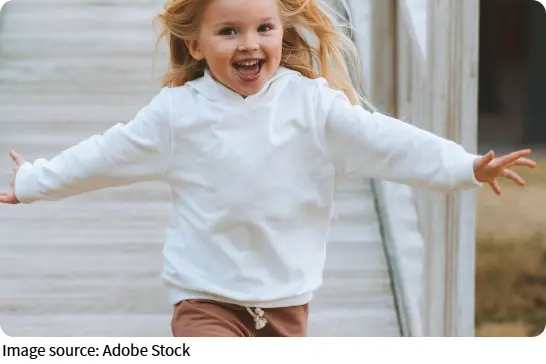
Balance activities contribute to several aspects of physical development, particularly motor skills, movement control, and coordination.
As explained in Creating Safe Play Areas on Farms by the National Children's Center for Rural and Agricultural Health and Safety: “Balance play develops body movement and control to help build gross motor skills. It also helps children improve coordination and concentration skills.”
Stronger Motor Skills
Walking, hopping, jumping, and changing direction help children practise fundamental movement patterns. These abilities provide a foundation for playground activities, recreational games, and everyday physical tasks.
Better Postural Control
Balancing on different surfaces and maintaining stable positions encourages children to develop body alignment and controlled movement. These skills contribute to stability when standing, walking, and changing positions.
Greater Body Awareness
Shifting weight, stepping, and turning help children recognise how their bodies move in relation to their surroundings. This awareness supports movement accuracy and coordination.
Physical Confidence and Independence
Completing age-appropriate activities allows children to recognise their abilities, explore new movements, and gradually develop confidence in their physical skills.
Encouraging Development Through Play
Play-based movement creates opportunities for children to practice physical skills in a stimulating and supportive environment. Activities can be adapted to individual abilities, allowing children to progress gradually while exploring different movement patterns.
Parents, caregivers, and educators can introduce simple equipment and structured activities, including low balance beams, floor markers, stepping exercises, and obstacle courses. Each activity can encourage children to practice stability, coordination, and controlled movement.
The difficulty of exercises should increase gradually according to each child's developmental stage and abilities. Appropriate equipment, stable surfaces, and close supervision by parents, caregivers, or educators help provide a suitable environment for physical exploration.
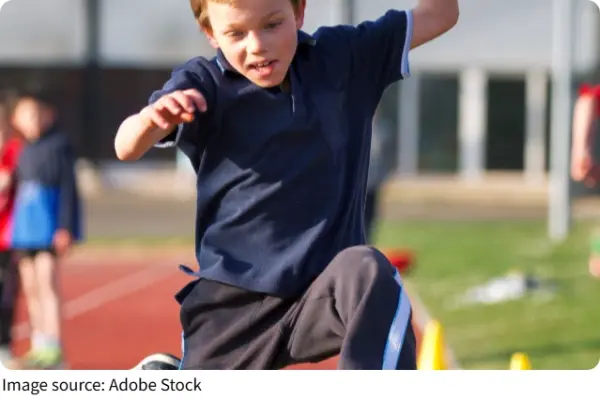
Balance and coordination are fundamental to children's physical development. Through varied, supervised play activities, children can develop essential motor skills, improve postural control, and strengthen body awareness. Providing regular opportunities for movement also encourages independence, physical confidence, and an active approach to everyday life.