Colombia's Giant Lily!
Nolan O'Connor
| 24-11-2026
 · Plants team
Sometimes an important scientific discovery begins with an ordinary photograph. That was the case with a giant waterlily growing in a remote part of Colombia. A picture shared on social media caught the attention of a specialist, who noticed that the plant appeared in a location where a similar species was not expected to grow.
Several years of investigation eventually led researchers to identify a previously unknown species, Victoria colombiana. Although its enormous leaves make it an extraordinary botanical find, scientists estimate that only a small number remain in their natural environment.
A Photograph That Raised Questions
The story began when Jeremiah Harris, who operates a specialist plant nursery in the United States, shared a photograph of himself among giant waterlilies on Instagram. The picture was taken in the Inírida River region of Guainía, northeastern Colombia. Harris initially believed the plants were Victoria amazonica, one of the better-known giant waterlily species. However, Carlos Magdalena, a waterlily expert at the Royal Botanic Gardens, Kew, noticed something unusual about the location.
The natural range of Victoria amazonica does not extend to the Inírida River. This geographical detail made Magdalena question whether the plants in the photograph belonged to a different species. He contacted Harris to establish where the picture had been taken. Rather than immediately declaring a new discovery, Magdalena began examining satellite images and working to secure the funding and permissions needed for an expedition.
Finding the Plants in a Remote Forest
After years of preparation, Magdalena joined botanists from the botanical garden in Bogotá and members of local Indigenous communities for a five-day journey into the rainforest. The search was not straightforward. The team explored flooded forest areas for several days without finding the plants. Time was running short, and their return flight was approaching.
A local driver eventually suggested another place to investigate. With only about 10 hours remaining before the team's departure, they travelled overnight across the water to a small lake hidden within the flooded forest. There, they finally located the giant waterlilies.
For Magdalena, seeing the plants in their natural setting was an emotional moment. The expedition also allowed researchers to collect the material required for a formal scientific assessment. The team's work resulted in a study published in the journal Phytotaxa on October 9, 2026. The research confirmed that the plants represented a species new to science, officially named Victoria colombiana.
What Makes Victoria colombiana Special?
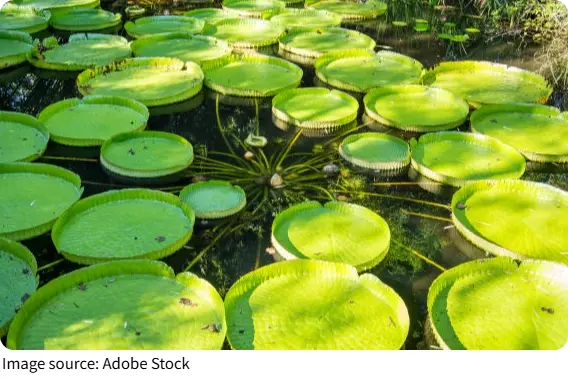
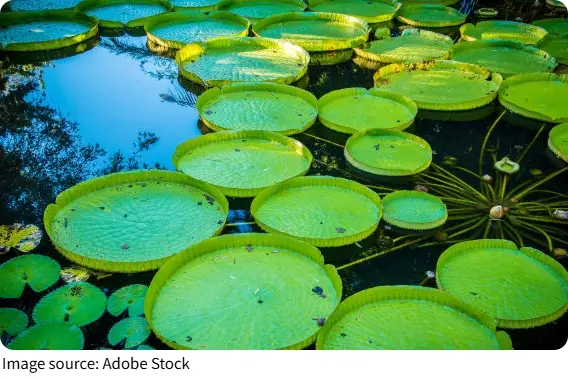
Giant waterlilies are among the oldest flowering plant groups still living today. Their enormous leaves can reach approximately three metres across and are strong enough to support the weight of a small child. The size of Victoria colombiana makes it particularly remarkable. Its broad floating leaves can become so extensive that the plant is visible in satellite imagery. This unusual scale also makes the species an impressive example of the diversity found in tropical freshwater environments.
The discovery also demonstrates why location matters in botanical research. Plants that resemble one another may belong to different species, and their geographical distribution can provide important clues. In this case, the plant's presence outside the expected range of a familiar species encouraged researchers to investigate further.
A Rare Plant With an Uncertain Future
The discovery brings an important concern into focus. Researchers estimate that only 30 to 50 Victoria colombiana plants remain in the wild. This extremely limited population places the species at serious risk. The team is working towards an official assessment through the International Union for Conservation of Nature's Red List. Such an assessment would help establish its conservation status using recognized criteria.
Researchers are also considering practical ways to support its future. One proposal involves establishing a population in a more accessible lake within Indigenous territory. This could make continued observation and conservation work easier. Another priority is collecting seeds and growing the plants in Bogotá. Successful cultivation could eventually make it possible for the species to be grown at Kew Gardens as well.
The identification of Victoria colombiana shows how a simple photograph can lead to meaningful scientific progress when it reaches someone with the knowledge to recognize an unusual detail. With perhaps just a few dozen individuals remaining in the wild, protecting this giant waterlily is now an important priority.