Europe's EV Challenge

Finnegan Flynn
| 24-11-2026
 · Automobile team
Europe's electric vehicle market is becoming an increasingly important test for Chinese carmakers. Their market share is growing, several manufacturers are establishing production partnerships across the region, and competition is no longer based on affordable prices alone. Technology, local manufacturing and the ability to adapt to European regulations are becoming just as important.
Chinese brands accounted for 12.7% of Europe's new-car market in the third quarter of 2026, overtaking Japanese manufacturers, which held 11.9%, for the first time over a full quarter, according to Dataforce. In Norway, their share reached 22.5% in October, according to the Norwegian Road Traffic Information Council.
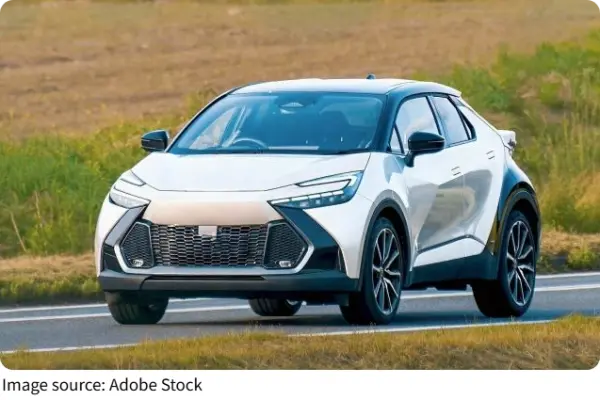
Chinese Manufacturers Move Closer to European Buyers
Several recent production announcements show how this strategy is developing. XPeng's G9L completed its first production trial at Magna's Austrian plant on October 7, 2026. On October 16, Leapmotor and Stellantis began producing the B10 at Stellantis' Spanish facility. Plans for the B05 were announced three days later.
Great Wall Motor also announced an agreement on October 27 to produce its Ora 5 in Bulgaria. Production is scheduled to begin in early 2027, with planned annual capacity of 50,000 vehicles. These projects demonstrate different ways Chinese manufacturers can enter the European production network. Some are working with established automotive companies, while others are arranging manufacturing facilities closer to their intended customers.
Technology Is Becoming a Competitive Advantage
China's position in electric vehicle manufacturing gives its companies a considerable production advantage. The country produced nearly 75% of the world's electric cars and more than 80% of its battery cells in 2025. The International Energy Agency estimates that producing a small SUV in China costs more than 30% less than in advanced economies. This cost difference has attracted attention from other automotive suppliers.
Japan's Koito Manufacturing, for example, has been dismantling BYD and Aito headlights to examine their design and materials. One engineer told Nikkei Asia that reducing costs is necessary to remain competitive. However, lower production costs are only part of the picture. Chinese manufacturers are also investing in driver-assistance systems, cockpit software and adapting chips for their vehicles.
An XPeng insider told TechNode that manufacturing hardware can be copied, but developing an intelligent vehicle architecture that continues to improve across different models requires sustained investment. This suggests that competition is increasingly about the technology supporting the vehicle, not simply the price displayed in a showroom.
Domestic Pressure Encourages Overseas Expansion
Chinese manufacturers have strong reasons to seek customers outside their home market. In 2025, electric vehicle production in China exceeded demand by 20%. At the same time, intense price competition reduced profit margins and encouraged companies to look for additional growth opportunities.
Exports provided one route. Chinese electric-car exports more than doubled in 2025, reaching a record 2.5 million vehicles. Sales of Chinese-made electric cars in Europe increased by nearly 50% to approximately 940,000. Nevertheless, Europe is not the only destination. According to the IEA, more than half of Chinese electric cars sold overseas went to markets outside Europe and the United States.
Why Local Manufacturing Matters
Exporting vehicles directly from China can involve higher tariffs, additional transport expenses and longer delivery times. Local assembly can help manufacturers address these difficulties while making it easier to adapt products to regional preferences. An XPeng insider described local manufacturing as a way to improve delivery efficiency, reduce trade risks and bring the company closer to customers.
However, building a factory is not automatically the best choice. The decision depends on market size, trade regulations, supply chains and local requirements. Smaller or less predictable markets may be better served through exports, while larger markets could justify contract assembly or dedicated production facilities.
European Rules Add Another Challenge
The EU's proposed Industrial Accelerator Act could further influence these decisions. The proposal would connect certain public incentives and procurement opportunities with requirements for products to qualify as Made in Europe. According to the IEA, eligible small electric vehicles and company cars would need to be assembled within the EU. In specified cases, 70% of non-battery components would also need to come from the EU, alongside separate requirements concerning battery origins.
Trade arrangements are also changing. An understanding reached between Beijing and Brussels in October could reduce Chinese hybrid and plug-in hybrid exports to the EU by more than half over four years, according to Reuters. Battery-electric vehicles manufactured in China remain subject to EU countervailing duties.
Chinese automakers are moving into a new stage of European expansion. Their growing market share, production partnerships and investment in vehicle technology show that they are seeking more than short-term export growth. The next stage of competition will be decided not only by the vehicles companies sell, but also by how effectively they build and operate their businesses in Europe.